

In the high-stakes world of professional sports, athletes are accustomed to intense scrutiny and competition. However, beyond the arenas and stadiums lies a less visible but equally formidable adversary: cybercriminals. These malicious actors are increasingly leveraging data breaches from luxury brands to infiltrate the lives of pro athletes, turning their personal information into weapons for targeted attacks.
The Real Target Isn’t the Brand - It’s the Buyer
When cybercriminals hit a luxury brand, they aren’t chasing press. They’re chasing profiles.
- Ferrari (2023): Hackers stole 7GB of private customer data.
- Christie’s (2024): 500,000 high-net-worth clients exposed in a ransomware breach.
These aren’t generic hacks. They’re intelligence operations. And if your name’s on the list, you’re on the radar.
Once this data is stolen, it doesn’t just disappear. It gets sold on dark web marketplaces, where cybercriminals piece it together to profile, manipulate, and exploit their targets.
From Dark Web to Direct Hit
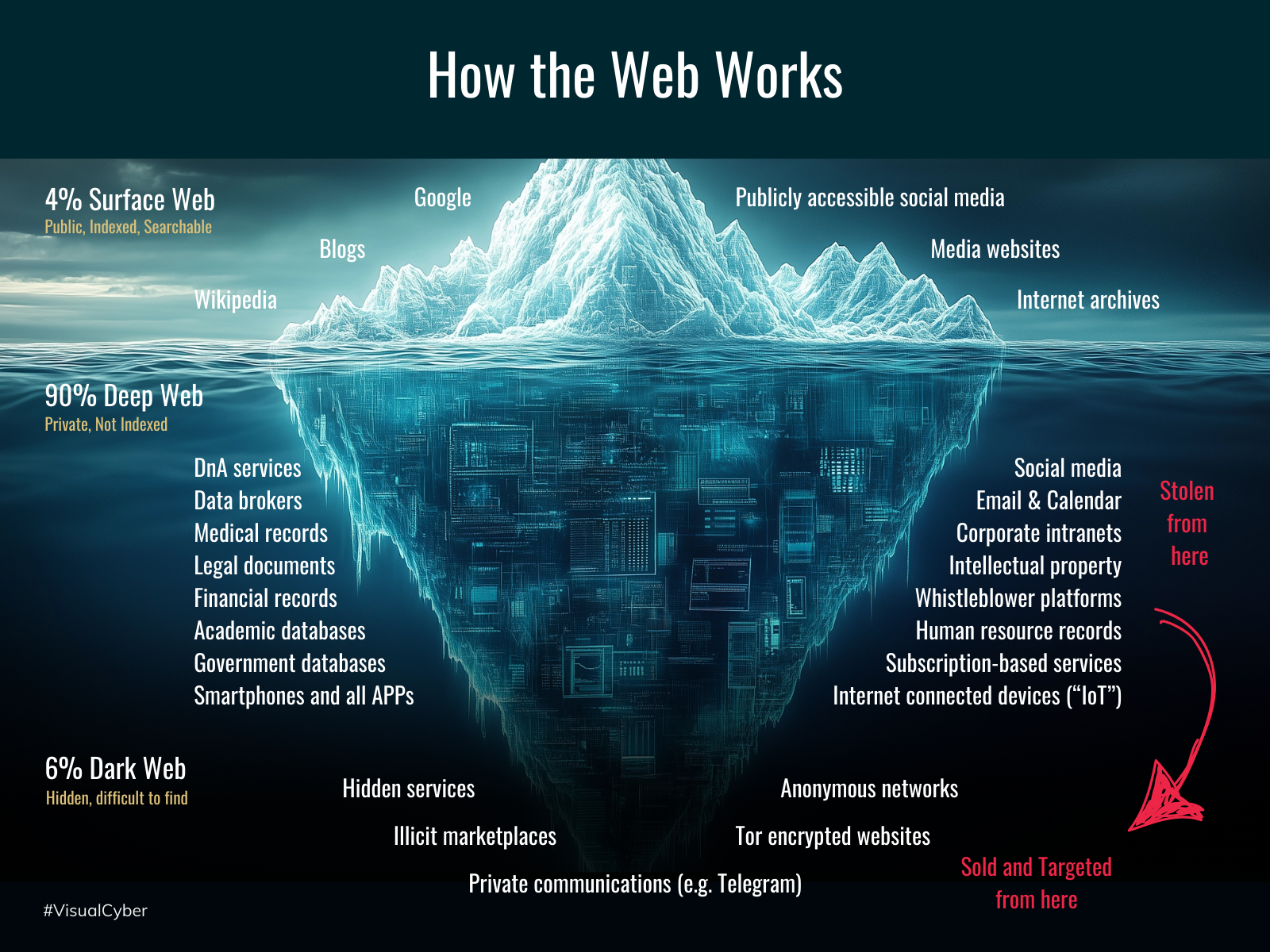
Read the original illustration’s text equivalent
The original illustration, titled “How the Web Works,” uses an iceberg to place publicly accessible information above the waterline and private, unindexed information below it.
- The upper area is labeled “4% Surface Web” and “Public, Indexed, Searchable.” Examples shown are Google, blogs, Wikipedia, publicly accessible social media, media websites and internet archives.
- The submerged area is labeled “90% Deep Web” and “Private, Not Indexed.” It lists DNA services, data brokers, medical records, legal documents, financial records, academic and government databases, smartphones and apps, social media, email and calendars, corporate intranets, intellectual property, whistleblower platforms, human-resource records, subscription services and internet-connected devices.
- The lower area is labeled “6% Dark Web” and “Hidden, difficult to find.” It lists hidden services, illicit marketplaces, private communications such as Telegram, anonymous networks and Tor-encrypted websites.
A red arrow connects “Stolen from here,” beside the private-information area, to “Sold and Targeted from here” in the lower area. This is the relationship relevant to the surrounding article: stolen information can be sold and used to build targeting profiles.
This text describes the labels in the original illustration; it does not verify its percentages or classifications.
Leaked data doesn’t just sit idle. It gets bundled, sold, and weaponized into full-blown digital dossiers.
These playbooks include:
- Your travel habits
- Your agent’s name
- Your last endorsement deal
- Your home's location
Then it gets tactical:
- Spoofed texts from “your agent" requesting wire transfers
- Deepfaked FaceTimes offering urgent brand deals
- Staged investment pitches designed to fool your wealth team
- Break-ins timed to travel posted by your circle
This isn’t random. It’s recon with intent.
They Don’t Just Target You. They Target Your Circle.
That’s the move.
- The assistant with calendar access.
- The cousin with your flight info.
- The manager who forwards “one quick doc.”
Every one of them is a potential access point - and attackers don’t hack computers – they hack people.
The Digital BUNKER™
Technology is one part of protection.
Human preparedness matters, too.
DOJO™ is an emerging training capability anticipated in 2027, designed to build human instinct for you and the people you trust.
- DOJO - Designed to help recognize real-world deception through scenarios.
- DOJO - Designed to help prepare the people who travel, post, and approve on your behalf.
- DOJO - Designed to help build human instinct that fits your life.
Because your instincts win games.
And now, they’re what win protection.
The Brand Doesn’t Make You the Target. Visibility Does.
Luxury isn’t the risk.
Untrained access is.
- [Explore the Digital BUNKER ] and turn your lifestyle into your defense - not your liability.
Because the next breach isn’t about the brand.
It’s about who’s buying - and whether you’re ready when they come looking.
